Search Intent Explained: The Secret Behind Better Rankings
You can publish a well-written page with perfect headings and still get no traffic if it answers the wrong question. Search intent is the reason someone typed a query. Google rewards pages that satisfy that reason quickly and clearly.
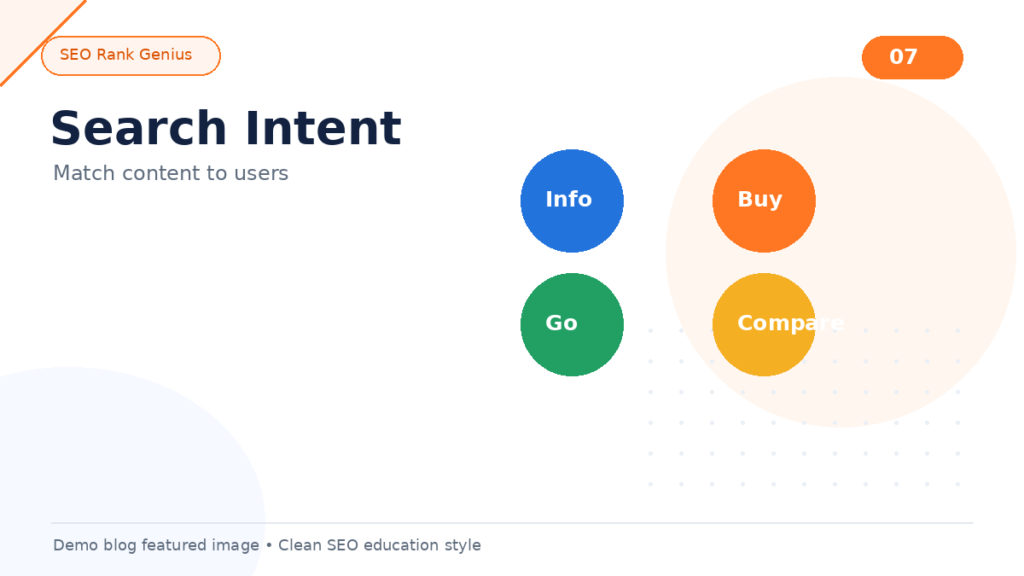
Understanding search intent helps you pick the right page type, format, and call to action before you write. It is one of the most practical skills in keyword research for a new website.
Quick Answer
Search intent is the goal behind a search query. The four main types are informational (learn something), navigational (find a specific site or page), commercial (compare options), and transactional (complete an action or purchase). Match your content format to the intent shown in top search results.
The Four Types of Search Intent
Informational intent
The searcher wants knowledge. They ask how, what, why, or best practices.
Examples:
- how to fix a leaky faucet
- what is crawl budget
- SEO tips for bloggers
Best formats: guides, tutorials, definitions, checklists, FAQ pages.
Navigational intent
The searcher wants a specific website, brand, or login page.
Examples:
- Gmail login
- SEO Rank Genius plugin
- Nike official site
Best formats: homepage, product page, support page. You usually will not target another brand’s navigational query unless you are that brand.
Commercial intent
The searcher is researching before a decision. They compare options and look for proof.
Examples:
- best WordPress SEO plugins
- pest control companies reviews
- Ahrefs vs Semrush
Best formats: comparison posts, reviews, roundup pages, service pages with trust signals.
Transactional intent
The searcher is ready to act: buy, book, download, or sign up.
Examples:
- buy running shoes online
- book pest inspection
- download SEO checklist PDF
Best formats: product pages, pricing pages, booking pages, landing pages with clear CTAs.
How to Identify Search Intent in Five Minutes
You do not need guesswork. Open an incognito window and review the top results for your keyword.
- Note the dominant page type: blog, product, category, tool, video
- Read the titles and snippets. Do they promise learning, comparison, or purchase?
- Check SERP features: shopping ads, local pack, featured snippet, People also ask
- Open three top pages. Are they long guides or short sales pages?
- Label the intent and choose the same general format unless you can clearly beat it
This quick SERP review fits naturally into any keyword research process and saves you from writing the wrong page.
When Intent Is Mixed
Some keywords blend intents. “Best CRM for small business” is commercial. “CRM pricing” leans transactional. “What is CRM” is informational.
If results show mixed formats, look at the majority. If Google shows mostly blog posts, start with a blog post. If it shows product and category pages, a commercial or transactional page is likely the better fit.
Intent and Content Structure
Intent should shape structure, not just the introduction.
| Intent | Strong page elements |
|---|---|
| Informational | Quick answer, steps, examples, FAQ |
| Commercial | Pros and cons, comparison table, criteria |
| Transactional | Price, specs, trust badges, clear CTA |
| Navigational | Brand match, easy navigation, contact paths |
For informational queries, a direct answer near the top helps both readers and answer engines. For commercial queries, comparison tables and decision criteria add real value.
Common Search Intent Mistakes
Publishing a sales page for a learning query. If every top result is a tutorial, a hard pitch page will struggle.
Using a blog post for a buying query. Shoppers often want product grids, filters, and pricing upfront.
Ignoring local intent. Queries with “near me” or city names usually need local signals and location pages.
Targeting competitor brand names. Navigational queries for other brands rarely convert for you and often waste effort.
Mini Scenario: Same Topic, Different Intent
Topic: pest control.
- “signs of termites” → informational blog post
- “termite inspection cost” → commercial service page with pricing factors
- “book termite inspection Dallas” → transactional landing page with booking CTA
One business might need all three page types. Each targets a different stage of the customer journey.
FAQ
Why does Google care about search intent?
Google wants results that satisfy the query. Pages that mismatch intent get fewer clicks, higher bounce rates, and weaker performance over time.
Can one page target multiple intents?
Sometimes, but it is risky. Mixed intent pages often lose to focused pages. Split topics when SERPs show clear format differences.
How does search intent relate to keywords?
Keywords are the words people type. Intent is the goal behind those words. Keyword research finds terms; intent analysis tells you what to build.
Does search intent change over time?
Yes. Seasonal events, product launches, and news can shift SERPs. Recheck intent when you update old content.
Where does search intent fit in keyword mapping?
During keyword mapping, assign each keyword to a URL that matches its intent. Mapping without intent leads to cannibalization and weak rankings.
Final Thoughts
Search intent explained simply is this: write the page the searcher expected to find. Check the SERP, label the intent, and build the format that fits.
If you want help finding on-page gaps and linking opportunities as you align content to intent, try the SEO Rank Genius demo on a live WordPress site.